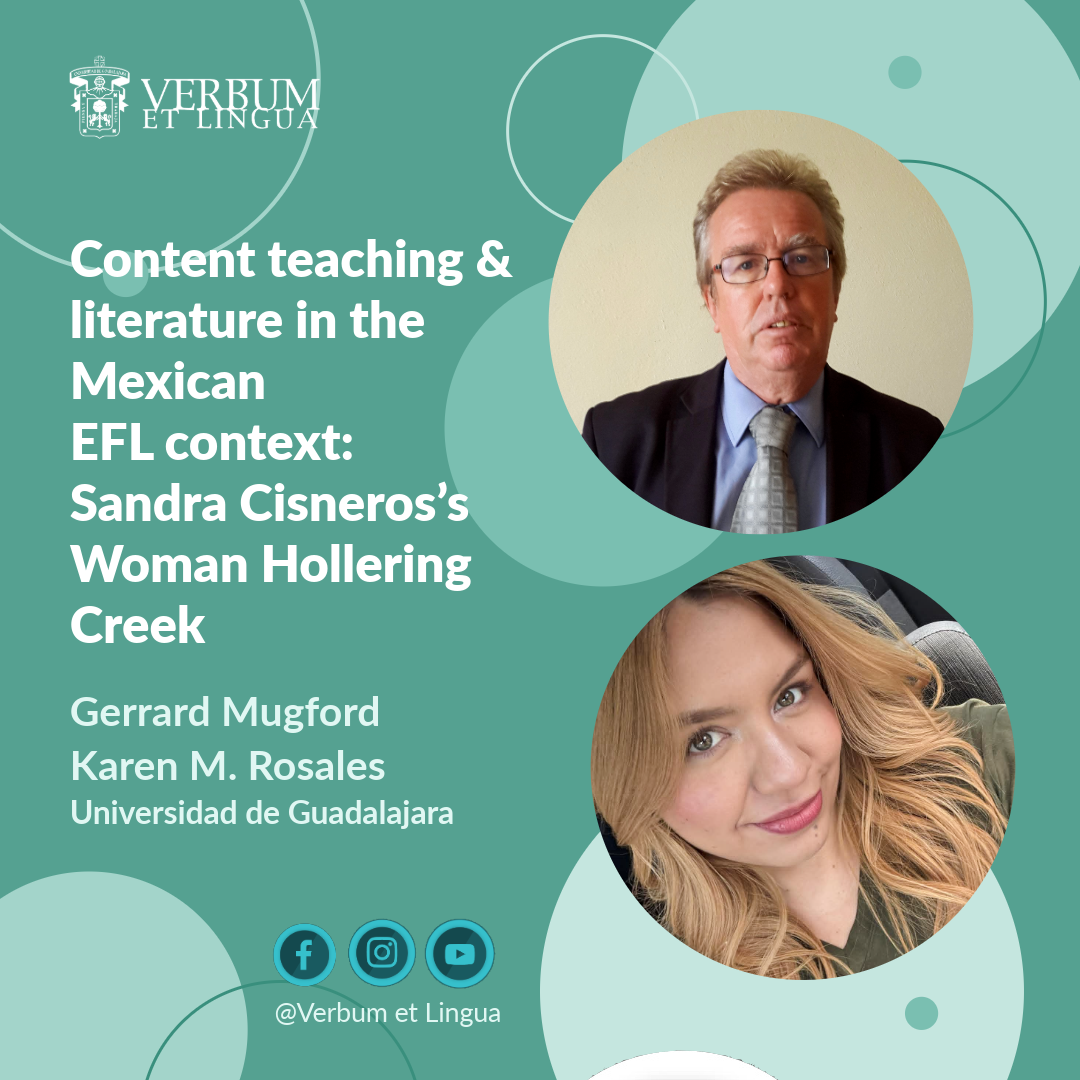
Content teaching & literature in the Mexican EFL context: Sandra Cisneros’s Woman Hollering Creek
DOI:
https://doi.org/10.32870/vel.vi27.366Palabras clave:
Literature, Teaching English as a Foreign language, Content and Language Integrated Learning, Practical criticismResumen
Learners’ first-language knowledge, experiences, and histories should be at the forefront of foreign-language teaching. This can be achieved through adopting Content and Language Integrated Learning (CLIL), which combines literature as content and reader involvement as language development. To enact such an approach, the ‘practical criticism’ model allows learners to engage in a reflective appreciation of literature that comes from themselves rather than from external literary experts. Focusing on the Mexican English-language learning context, this article examines how Sandra Cisneros’s short story, Woman Hollering Creek, can help learners to develop an appreciation of literature and increase their own understanding of language use. The purpose of this article is to offer a CLIL teaching-learning framework that enhances an appreciation of Chicano literature, which emerges from the learners themselves, and promotes cultural awareness as well as language sensitivity.
Descargas
Biografía del autor/a
Gerrard Mugford, Universidad de Guadalajara
Gerrard Mugford es un lingüista aplicado y especialista en educación lingüística de la Universidad de Guadalajara. Su trabajo se centra en la enseñanza del inglés, la formación de profesores y el análisis crítico de las políticas lingüísticas. Ha publicado investigaciones sobre ideologías del inglés, prácticas educativas y el impacto social del aprendizaje de lenguas en contextos mexicanos y latinoamericanos contemporáneos.

Descargas
Publicado
Cómo citar
Número
Sección
Licencia
Derechos de autor 2026 Gerrard Mugford & Karen Margarita Rosales Covarrubias

Esta obra está bajo una licencia internacional Creative Commons Atribución 4.0.